Introduction
Red onion is a flavorful vegetable used in cuisines around the world. It contains naturally occurring plant compounds, including flavonoids and other antioxidants, and can be enjoyed raw or cooked in many different dishes. ❤️🧅
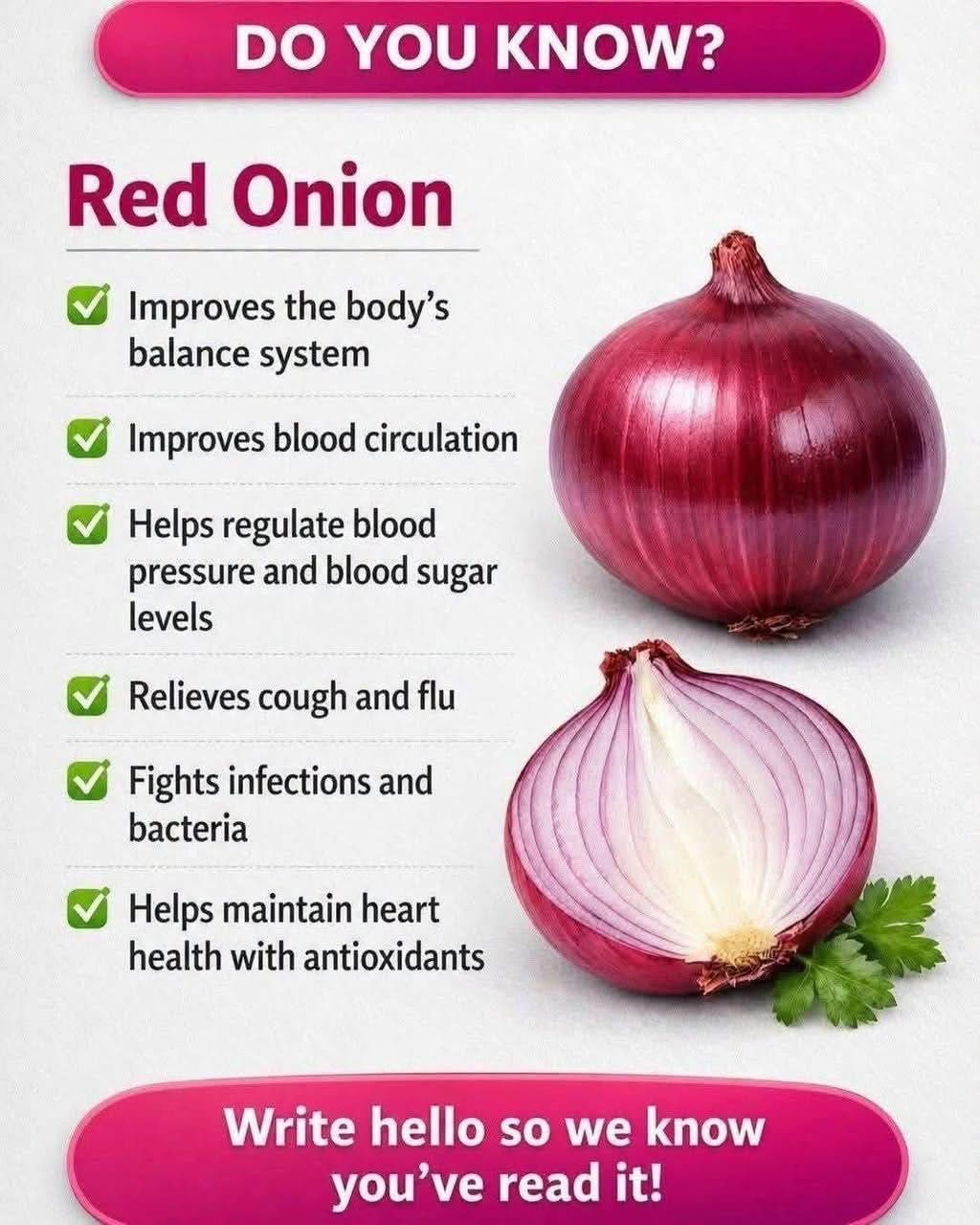
The image lists several health claims, including effects on blood circulation, blood pressure, blood sugar, infections, and coughs. These claims should not be interpreted as proof that red onion can treat or cure those conditions. Red onion is best considered a nutritious food rather than a medicine.
Ingredients
- 🧅 Red onion
The image does not provide a specific recipe, quantity, or additional ingredients, so I won’t add unsupported measurements or ingredients.
Instructions
- 🧅 Choose a fresh red onion.
- Peel away the outer skin.
- Wash the onion thoroughly.
- Slice or chop it according to how you want to use it.
- Add it to your meals, salads, sandwiches, or other dishes.
Methods
🥗 Raw Method
Thinly sliced red onion can be eaten raw and adds a crisp texture and strong, slightly sweet flavor to salads and other dishes.
🍳 Cooking Method
Red onion can also be cooked with other foods, where its flavor becomes softer and sweeter.
🌿 Everyday Food Method
Including red onion as part of a varied diet is a simple way to enjoy its flavor and naturally occurring plant compounds.
History
Onions have been cultivated and eaten for thousands of years and have played an important role in cuisines across many parts of the world. Red onions are particularly valued for their distinctive purple-red color, mild sweetness, and characteristic flavor.
They have also appeared in traditional food and folk practices, although traditional use does not establish that onions can replace medical treatment.
Benefits
🧅 Antioxidant compounds: Red onions contain flavonoids and other plant compounds with antioxidant activity.
❤️ Part of a heart-healthy diet: Replacing highly processed foods with vegetables such as onions can contribute to an overall nutritious eating pattern.
🥗 Nutritional variety: Red onion adds flavor and plant foods to meals without requiring complicated preparation.
⚠️ About the claims in the image: Statements that red onion directly “fights infections,” relieves flu, or regulates blood pressure and blood sugar should not be treated as established treatments. Eating onion can be part of a healthy diet, but it is not a substitute for prescribed medication or medical care.
Formation
A simple red-onion preparation begins with cleaning and peeling the onion, followed by slicing or chopping it. From there, it can be incorporated into a meal either raw or cooked.
Because the supplied image contains no specific medicinal recipe, there is no reliable basis for giving a particular amount, soaking time, boiling time, or combination with other ingredients.
Conclusion
🧅 Red onion is a versatile, flavorful vegetable that can easily become part of everyday meals.
🌿 Its naturally occurring plant compounds make it an interesting food nutritionally, but viral health claims should be separated from scientifically established medical treatments.
❤️ Enjoy red onion as food, and seek appropriate medical advice for persistent symptoms or health conditions.
Lovers ❤️🧅
If you love simple, natural ingredients, red onion is an easy addition to salads, sandwiches, cooked dishes, and many traditional recipes. 🥗✨
Good food, balanced nutrition, and simple ingredients can all have a place in a healthy lifestyle. ❤️🌿