Sweet-Tangy • Colorful • Traditional • Beautifully Preserved
🌟 INTRODUCTION
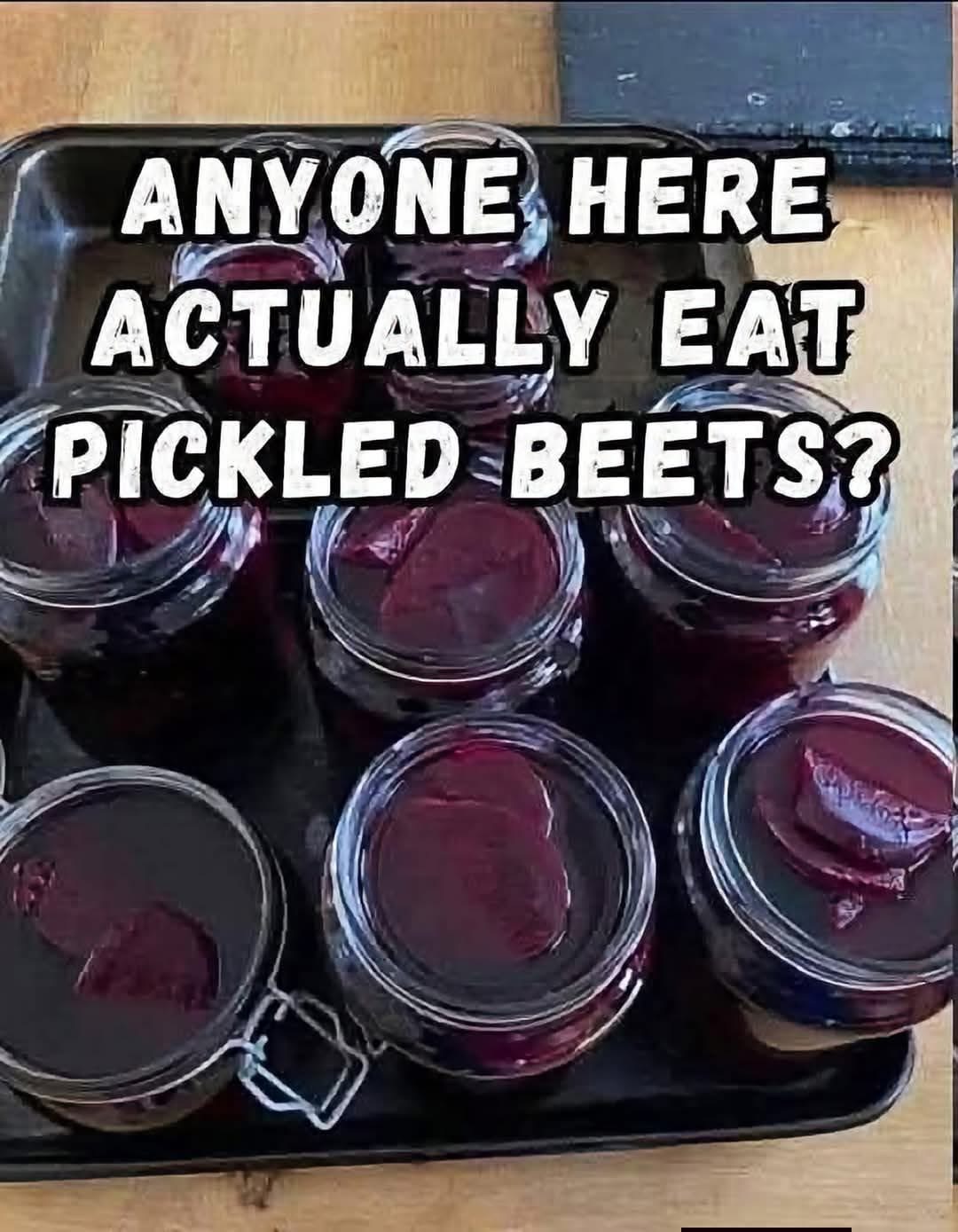
The second photograph shows a collection of jars filled with deep red-purple pickled beets. ❤️🫙
The beautiful dark ruby color immediately makes these pickled beets stand out. The beets are packed into individual jars and surrounded by a dark pickling liquid.
Pickled beets are a wonderful way to enjoy the earthy flavor of beets with the bright, tangy character created by pickling.
The jars shown in the photograph have a traditional homemade-preserved appearance, making them look like something prepared in a home kitchen and saved for later enjoyment. 🏡❤️
They can be served as a side dish, added to a meal, or enjoyed straight from the jar by people who genuinely love that sweet-and-tangy beet flavor.
Important note: The photograph does not show a written recipe, exact quantities, vinegar type, sugar amount, salt amount, spices, processing time, or canning instructions. Therefore, I will not invent exact measurements and present them as if they came from the image.
🛒🫙 INGREDIENTS
The main ingredient clearly visible is:
❤️ BEETS
- Fresh beets, cooked and prepared for pickling
🫙 PICKLING LIQUID
The jars clearly contain a pickling liquid surrounding the beets.
A traditional pickling liquid commonly contains acidic and seasoning components, but the photograph does not provide the exact ingredients or measurements used in these particular jars.
Therefore, the following cannot be confirmed from the image:
- Exact vinegar
- Exact sugar quantity
- Exact salt quantity
- Exact spices
- Exact water quantity
I would rather leave those details open than invent a recipe that wasn’t supplied.
📋👩🍳 INSTRUCTIONS
❤️ STEP 1 — PREPARE THE BEETS
Begin with fresh beets.
Clean them thoroughly and prepare them for cooking.
The finished beets in the photograph are smooth, dark red-purple, and cut into pieces or slices suitable for placing into jars.
🍲 STEP 2 — COOK THE BEETS
Cook the beets until they become tender enough to prepare for pickling.
The exact cooking method and time are not visible in the photograph.
Once tender, allow them to cool enough to handle safely.
🔪 STEP 3 — PREPARE THE BEETS FOR THE JARS
Peel the cooked beets if necessary.
Cut them into suitable pieces or slices.
The pieces should be easy to remove from the jar later.
Their intense red-purple color is one of the most recognizable features of the finished product. ❤️
🫙 STEP 4 — PREPARE THE JARS
Use clean jars suitable for the intended storage method.
Arrange the prepared beet pieces inside the jars.
Pack them neatly without crushing them.
The photograph shows several small jars filled generously with beet pieces.
🥣 STEP 5 — PREPARE THE PICKLING LIQUID
Prepare the pickling liquid according to your chosen tested pickling recipe.
Because the photograph does not provide the liquid’s exact ingredients or proportions, those measurements cannot be accurately reproduced from the image alone.
The important visual characteristic is the dark reddish-purple liquid surrounding the beets.
🫙 STEP 6 — COVER THE BEETS
Pour the prepared pickling liquid over the beets so that they are properly surrounded by the liquid.
The beet pieces should be covered according to the safe storage method being used.
❤️ STEP 7 — SEAL AND STORE SAFELY
Close the jars using the appropriate lids and follow a tested food-preservation method for the intended storage.
For shelf-stable canning, use an up-to-date tested pickled-beet canning recipe from a trusted food-preservation authority rather than relying on an image alone.
If the beets are being refrigerated rather than canned for shelf storage, keep them refrigerated and follow appropriate food-safety guidance.
🍽️ STEP 8 — SERVE
Once properly pickled and ready to eat, serve the beets chilled or alongside your favorite meal.
They can provide a beautiful splash of color on the plate. ❤️🥗
Their tangy character makes them especially appealing beside savory foods.
👩🍳🔥 METHODS
🫙 PICKLING METHOD
Pickling preserves food by placing it in an acidic, seasoned liquid.
For beets, this creates a completely different flavor from plain cooked beets.
Instead of only tasting earthy and naturally sweet, the finished beets develop a characteristic tangy pickled flavor.
❤️ BEET PREPARATION METHOD
The beets are cooked first and then prepared for placement into jars.
This produces the tender texture visible in the photograph.
🫙 JAR METHOD
The prepared beet pieces are arranged in jars and surrounded by pickling liquid.
The jars shown in the photograph demonstrate the traditional visual appearance of homemade pickled vegetables.
📜🏡 HISTORY
Pickling is one of the oldest and most widely used food-preservation techniques.
Before modern refrigeration, people developed methods for keeping seasonal vegetables available for longer periods.
Beets are particularly attractive for pickling because their strong natural color transfers into the surrounding liquid, producing the beautiful deep-red appearance seen in these jars. ❤️
Pickled beets have become a familiar preserved food in many home kitchens and communities.
Recipes vary greatly from family to family. Some are sweeter, some more acidic, and others include different spices.
The exact recipe in the photograph, however, cannot be determined from the image itself.
💛❤️ BENEFITS
❤️ Beets
Beets are a vegetable that naturally provides nutrients and plant compounds.
🫙 Pickling
Pickling gives beets a longer-lasting preserved form when prepared and stored using an appropriate food-safety method.
🌈 Color
Their intense natural color makes them a beautiful addition to a meal.
🍽️ Versatility
Pickled beets can be served as a side dish or incorporated into different meals.
Note: Pickled foods can contain significant amounts of sodium or added sugar depending on the recipe, so the nutritional profile varies with the pickling liquid.
🫙🌈 FORMATION
The transformation is beautiful:
❤️ FRESH BEETS
⬇️
🍲 COOKED UNTIL TENDER
⬇️
🔪 SLICED OR CUT
⬇️
🫙 PLACED INTO JARS
⬇️
🥣 COVERED WITH PICKLING LIQUID
⬇️
❤️ DEEP RED-PURPLE PICKLED BEETS
⬇️
🫙❤️ READY TO SERVE!
💡👩🍳 PICKLING TIPS
✨ Use clean jars and equipment.
✨ Prepare the beets evenly so the pieces are similar in size.
✨ Keep the beets properly covered by the pickling liquid.
✨ For shelf-stable preservation, follow a tested canning recipe rather than improvising the acid-to-water ratio.
✨ If making refrigerator pickles, keep them refrigerated.
✨ Allow the flavor to develop according to the tested recipe you are following.
🥰❤️ LOVERS
These are for:
❤️ Beet lovers
🫙 Pickle lovers
🥗 Vegetable lovers
🏡 Homemade-preserving lovers
🍽️ Traditional-food lovers
🌈 Colorful-food lovers
😋 Sweet-and-tangy flavor lovers
❤️🫙 CONCLUSION
Homemade Pickled Beets are a beautiful example of how a simple vegetable can be transformed into something completely different.
The deep ruby color, tender beet pieces, and tangy pickling liquid make these jars both attractive and delicious-looking. ❤️
Whether served beside a hearty dinner, added to a vegetable plate, or enjoyed by someone who loves eating pickles straight from the jar, pickled beets have a distinctive character that is hard to confuse with anything else.
❤️🫙🥕 SWEET, TANGY, COLORFUL & CLASSIC! 🥕🫙❤️
🥰🫙 FOR THE PICKLED-BEET LOVERS
If you open the refrigerator and immediately look for the jar of pickled beets…
If you love that beautiful deep-purple color…
If you enjoy a strong tangy bite with your meals…
❤️🫙 THEN THESE ARE DEFINITELY YOUR KIND OF PICKLE! 😋
Two beautiful comfort-food recipes — Chicken & Dumplings 🍗🥟 and Homemade Pickled Beets ❤️🫙 — made into the long format you like, with the missing quantities kept honest rather than invented.